Conference paper submissions
MEFkon submissions
Papers for the faculty’s yearly conference, from the first upload to the proceedings.
The situation
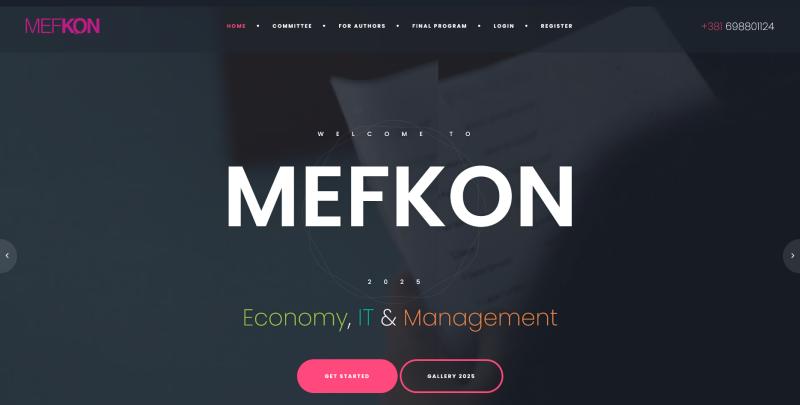
MEFkon is the faculty’s international conference on economics, management and IT, held in Belgrade every year. 2026 is its twelfth edition.
For every edition, papers have to be collected, checked against the template, reviewed, accepted or sent back for changes, and finally published in the proceedings. Without a system, it’s hard for anyone to see where a given paper is.
What I built
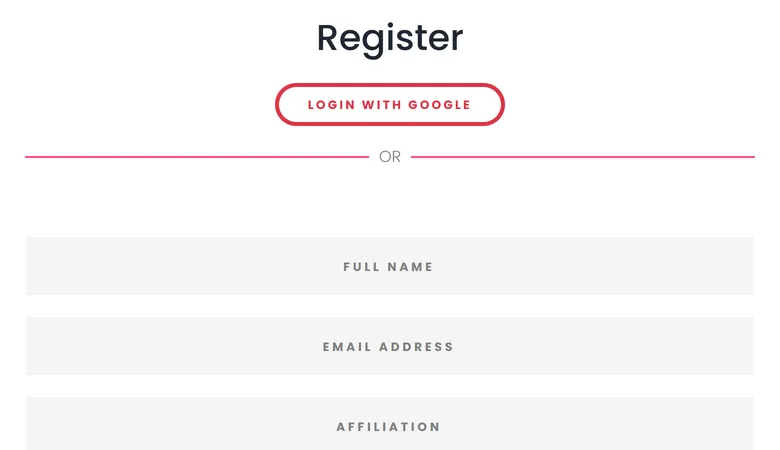
I built the conference website together with the submission system behind it. Authors register with Google or with a short form, then send their paper through an online form.
Each submission has a status that moves through fixed steps, from submitted to reviewed to decided, so authors and organizers always see the same picture.
The public pages carry everything else an author needs: topics, important dates, the paper template, the program and past editions.
How it works
The path of a paper, as the conference describes it to authors:
Proceedings The book, these days usually a PDF, that collects the papers presented at a conference.
- Register With a Google account, or a short form with name, email and affiliation.
- Submit Upload the paper, written on the official template. Six to ten pages is the recommended length.
- Review Experts review it. Papers that don’t follow the template are returned for revision.
- Decision Authors are told whether their paper is accepted.
- Proceedings Accepted papers are published in the conference proceedings, which have an ISBN.
Based on the process described on mefkon.rs.
My part
I designed and built the platform: the public website, registration and sign-in, the submission form, and the review workflow behind it.
The result
Every paper for MEFkon comes in through one form and has a status everyone involved can check. Submissions for the 2026 edition go through it.
Technical details
For developers: the stack and how the pieces fit together.
- Framework
- Laravel (PHP)
- Interface
- Livewire and Alpine.js, so multi-step forms feel like an app without a separate front-end framework
- Styling
- Tailwind CSS
- Workflow
- Submissions move through a fixed set of statuses: a small state machine
- Sign-in
- Google sign-in, or registration by email